
✅ EN 15194 Certified
✅ UL 2849 Certified
📜 One Year Warranty
✅ EN 15194 Certified ✅ UL 2849 Certified 📜 One Year Warranty
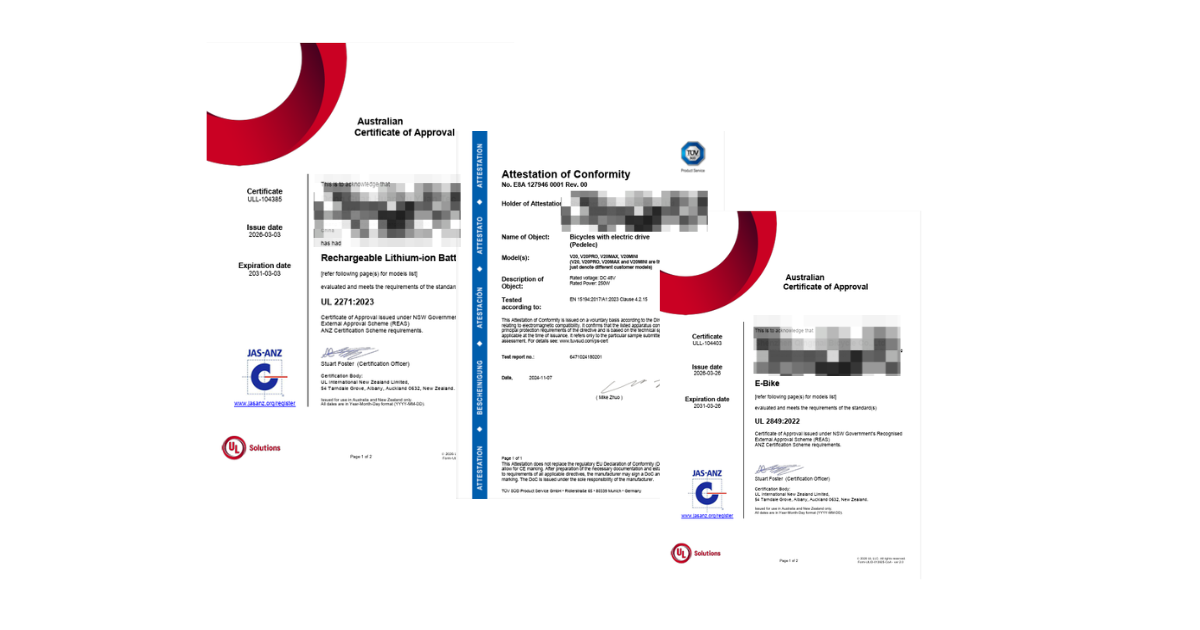
Yes! We Are Certified
-
Built for comfort, power, and everyday riding. Perfect for commuting, beach cruising, or weekend adventures.
Removable 48v 18.2AH Li-Ion Battery
54.6v 2AH Charger
Max Speed PAS 25km/h
Max Speed Throttle 6km/h
250w Guangfeng Motor
EN 15194 Certified
UL 2849 Certified
-
The V29 Pro comes packed with a dual battery setup for those long range commutes or trail rides with a maximum range of 140km!
2 x Removable 48v 18.2AH Li-Ion Battery (36.4AH Total)
2 x 54.6v 2AH Charger
Max Speed PAS 25km/h
Max Speed Throttle 6km/h
250w Guangfeng motor
EN 15194 Certified
UL 2849 Certified
-
Designed for comfort, style, and everyday practicality, this step-through e-bike makes every ride effortless.
1 x Removable 48v 18.2AH Li-Ion Battery
1 x 54.6v 2AH Charger
Max Speed PAS 25km/h
Max Speed Throttle 6km/h
EN 15194 Certified
UL 2849 Certified
-
Motorbike-inspired styling meets everyday practicality.
2 x 54.6v 2AH Charger
2 x Removable 48v 18.2AH Li-Ion Battery (36.4AH Total)
Max Speed PAS 25km/h
Max Speed Throttle 6km/h
250w Guangfeng motor
EN 15194 Certified
UL 2849 Certified
-
Its smaller 16-inch wheels and compact frame make the Mini a great option for urban riding, shorter trips and anyone who prefers a more manageable e-bike
250W Motor
36V 10.4Ah Battery
EN 15194 Certified
-
Built to carry more and make everyday trips easier. The Q10 Cargo combines a practical extended rear cargo platform with comfortable seating, making it a versatile choice for commuting, shopping, errands and everyday riding.
Removable 48V 15Ah Battery
250W Motor
Maximum Assisted Speed 25km/h
Maximum throttle 6km/h
EN 15194 Certified
E-Bike Laws Explained: A Simple Guide for Riders
Getting familiar with legal e-bikes In Australia
Trying to work out whether an e-bike is legal can feel confusing at first. Different manufacturers promote their bikes in different ways, and terms like “EPAC” and “PAPC” often leave riders unsure about what actually matters.
The good news is that legality is not determined by the brand — it comes down to whether the bike meets regulations. Recent updates to Australian compliance standards have made it much easier for riders to identify approved e-bikes and avoid models that fall outside the law.
The easiest way to understand e-bike rules
A simple way to think about it is by comparing three types of transport:
A motorcycle is powered entirely by an engine.
A regular bicycle is powered completely by the rider.
An e-bike combines both, where the rider pedals and the electric motor provides assistance.
Under Australian regulations, the key factor is that the rider must still be pedaling while the motor assists. If the bike can travel purely on motor power beyond the permitted limits, or exceeds legal speed and power restrictions, it is no longer considered an e-bike under Australian law.
In that situation, the bike may be classified as a motor vehicle, making it illegal to use on public roads, shared paths, and cycleways without proper registration and licensing.
The Two Approved E-Bike Classifications
Quick overview:
When buying an e-bike, always check that the bike is classified as either a PAPC or an EPAC. Approved bikes should include certification details or a compliance label attached to the frame.
Look for markings similar to:
“Certified EPAC to EN15194”
“Certified to UL 2849”
Other recognised compliance standards and certification numbers
These markings indicate the bike has been tested to meet recognised safety and legal requirements.
1. Power Assisted Pedal Cycles (PAPC)
A Power Assisted Pedal Cycle, commonly called a PAPC, is an electric bicycle fitted with a motor output of up to 200 watts.
These bikes are designed to assist the rider only while pedaling and have been recognized as legal for decades.
Key PAPC features:
Maximum motor power: 200W
Pedal assistance required for movement
Designed primarily to support rider pedaling effort
2. Electrically Power Assisted Cycles (EPAC)
An Electrically Power Assisted Cycle (EPAC) is the most common type of compliant e-bike seen today.
EPACs are allowed to use motors with up to 250 watts of continuous power output, giving riders improved performance while still remaining road legal.
This category was introduced to better align regulations with internationally recognized European e-bike standards.
Key EPAC features:
Maximum continuous motor power: 250W
Motor assistance cuts out beyond legal speed limits of 25km/h
Limited low-speed throttle assistance only, must cut off at 6km/h
Designed for everyday commuting and recreational riding
Main Differences Between PAPC and EPAC E-Bikes
Motor Power
PAPC: Up to 200W motor output
EPAC: Up to 250W continuous motor output
Throttle & Pedalling Rules
PAPCs require pedalling for motor assistance at all times
EPACs may allow limited motor-only assistance up to 6 km/h before pedalling is required
Final tip before buying an e-bike
Before purchasing any e-bike, always check for compliance markings, certification information, and legal power ratings. While many e-bikes may look similar, not all are approved for use on roads and bike paths.
For complete technical requirements — including weight limits, design standards, and safety regulations - If you would like to learn more you can refer to the official government e-bike guidelines - HERE.
From March 2029, only e-bikes that comply with EN 15194 will be able to be lawfully used on roads and roads related areas in New South Wales
Before using this vehicle, check the applicable local laws relating to your intended use of the vehicle on roads and road related areas.